
Nearest and Dearest
by Ollie Swasey
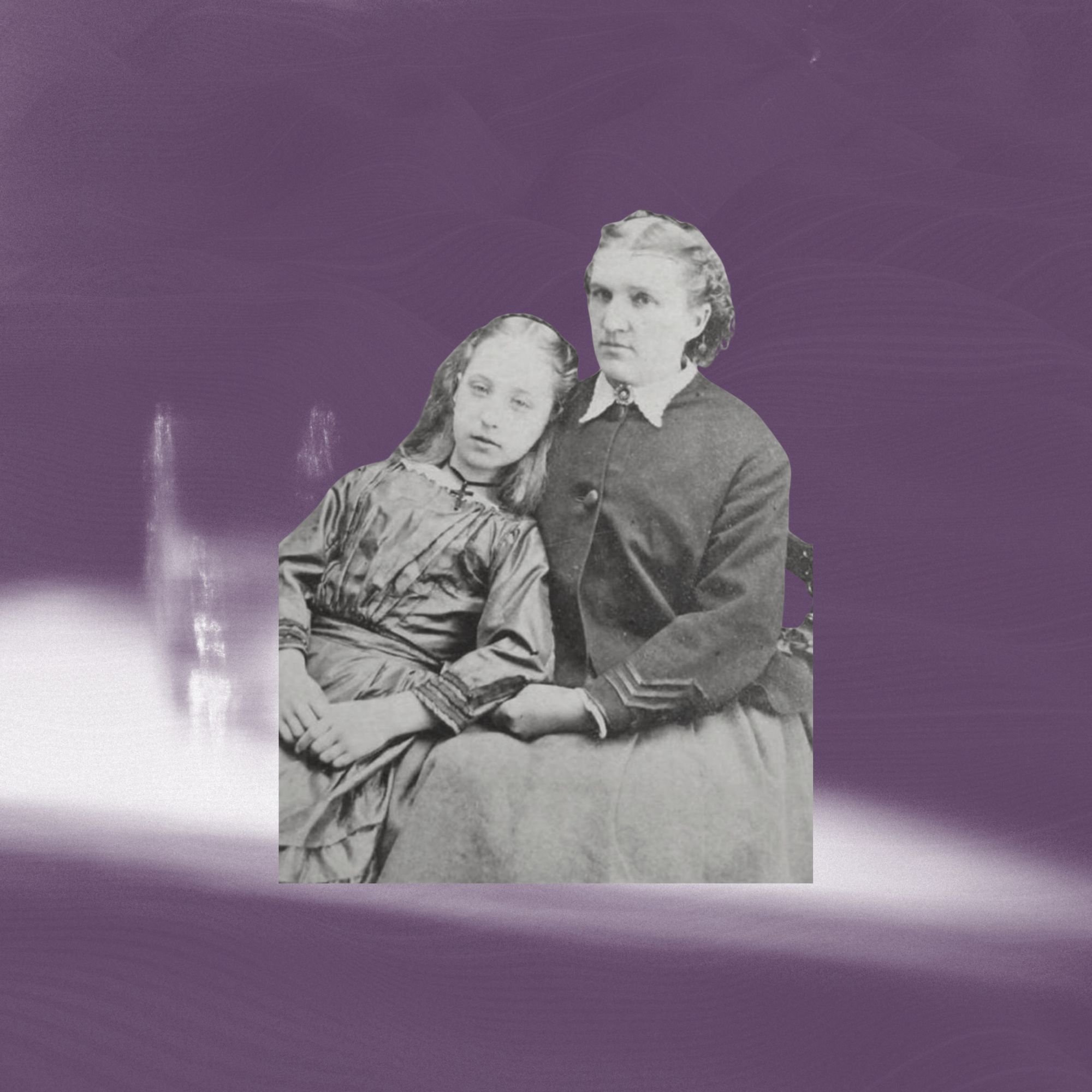
All her life, Emma had dreamed of having a daughter. From her first baby doll to the day the doctors laid Jane bloody and screaming on her breast, she knew her life’s purpose was to be a mother to a little girl. Now, years later, Jane was still her little girl—her baby, her sweetheart—but also her confidant, her closest and perhaps only friend in the world. She had given Jane everything, ruined her body, dedicated her life to raising her daughter as best she could and asked for nothing in return—only that Jane love her and cherish her as her mother for as long as she lived. And she did.
Emma spent most of her time in bed these days, waiting for Jane to come home from work. She was so tired now. Some years ago, she guessed, that had been the start of things: a late night glass of water, a sudden pain exploding her skull, a fall that hadn’t seemed bad at the time, though it must have been, given what came next. After the dark came upon her, Emma returned to awareness to find herself back in her own bed with Jane curled up against her chest, wracked with deep, wretched sobs. Emma tried to lift her hand to comfort her daughter, and discovered then that she could not move. She could not speak. She couldn’t even open her eyes.
She didn’t need her voice to tell Jane that something terrible had happened; that much, she seemed to understand. After that day, Jane had done everything for Emma. She worked hard at her job to support them, then came home to their dark little house at the end of each day and spent the evening at Emma’s side, caring for her in every possible way. She never called a doctor—Emma never believed in doctors, anyhow—but she tended her like a nurse; she brought medicines to Emma’s bedside, rubbed fragrant oils and balms into her skin, read from textbooks before injecting her veins with preparations that Emma supposed were meant to help regain her strength. Nothing Jane did ever seemed to help. Emma remained where she was, unmoving, unspeaking—but to feel her daughter’s loving hands on her body was so gratifying that she didn’t even care. Her doting echoed the selfless love that Emma had given to Jane as an infant, washing and dressing and feeding her until Jane was capable of loving her back. And now those roles had reversed, and it was finally Emma’s turn to be cared for the way she deserved.
Though Emma could no longer see, her mind populated the darkness with a perfect vision of what the room once had been: crowded with boxes, clothes in storage, a picture window with the blinds always drawn, dim light that turned blue as the shadow hand of the backyard tree fell across the bed at sundown each day. Time moved strangely when Jane was gone. Alone in the house, her memories felt like the present, and the present like a vague, half-remembered dream. In her mind she was a new mother, a broken woman, alone with the baby even when Bill was home, who returned from work in a gloomy, untalkative mood day after day after day. Jane needed so much from her then, and Emma was pouring from an empty cup. This was her life, as real now as it had been then: migraines, tears, solitude, unhappiness, regret.
But as time went on, as Jane learned to walk and talk, Emma realized her burden was becoming easier to bear. Once, when she’d forgotten to rotate the laundry and a bundle of Bill’s white shirts came out spotted with mildew, he had spent over an hour berating her in the kitchen before stalking off to bed alone. When he had gone, two-year-old Jane had toddled up to her weeping mother and laid a chubby hand on her knee. Emma looked up with a start, and found those beautiful brown eyes looking back at her—seeing her. It was the first loving gesture anyone had shown her in months. After that, Emma went to Jane for everything.
Then came the good memories. The better days. The older Jane got, growing into her ears, baby-blonde hair dulling to brown as she reached puberty, the better she was able to understand and empathize with her mother’s struggles. She comforted Emma, allowed her to lie with her in her twin bed after school and sniff her sweet scalp, occasionally offering mild, thoughtful advice in response to Emma’s grievances of the day. And she was never any trouble. What a sweet, easy child she was. She excelled in school and extracurriculars, and still always made time for her mother, every day. When Emma dressed her, she embraced it. When Emma told her, no boys, she listened. When Emma said, come lie down with mommy, she obeyed.
This was where Emma liked her mind to stay. She meditated often on those warm golden days, before Jane started to grow up. Before everything changed. No child was perfect, but through those teenage years it often felt to Emma like Jane was trying her hardest to break her mother’s heart. She rebelled, pulled away, shut her out, their long thoughtful talks growing shorter and fewer by the day. Against Emma’s wishes, Jane changed her hair, started dressing immodestly in clothes that made her look trashy and cheap. Bill was no help—he had never taken Emma’s side once in their entire marriage—and so Emma was alone, watching helplessly as Jane became someone she didn’t recognize, and very nearly couldn’t love. When Jane had come home one day and told her that she was moving out, Emma could barely speak through her tears.
Darkness encroached on her mind. Had she been such a horrible mother that Jane was capable of casting her aside like nothing? Was she really so easy to abandon? Did her sacrifices mean nothing? Perhaps this was the fate of every mother, to be discarded by the children they worked so hard to raise. Sure, Jane said that she would call often and visit when she could, but it was all lip service. Even the suffering of the earliest years was no match for this, now.
Bill died when Jane was twenty-five. Heart attack, almost instant. Even though Emma had not loved him for many years by the time it happened, she found herself catatonic with grief, completely non-functional in the face of his sudden absence. And it was Jane, her darling girl, who came to save her. She moved out of her apartment in the city, came back to her rightful home and took care of everything when Emma could barely manage to sit up in bed. Even though Emma could hear her at night, weeping softly in her childhood bed within the silent house, Jane never let it show; she put on the bravest face and handled it all. It was all Emma could do to disguise her joy. Bill was gone—but she finally had her daughter back.
Jane kept her nice job in the city, commuted there and back each day, and never moved out again. From then on, it was just the two of them, no strangers or bad influences impinging on their relationship as mother and daughter. They had come to an understanding that this was best for both of them. The house got older around them, and so did they, as close-knit as a pair could be. And after Emma’s accident, they grew closer still.
“Hi, Mommy.” Jane’s voice at the threshold of the room brought Emma back to the world. She must have just come home from work—or perhaps she was just leaving. “You look so pretty today.”
A weight shifted on the bed as Jane came to lie down beside her mother. Memories colored Emma’s vision of the room, of her daughter: the cool evening light that covered them both like a shroud, the scent of Jane’s clean hair, the rise and fall of her chest as she lay beside her. At the start of things, Emma hadn’t been able to open her eyes; now it seemed that they were stuck open and could not close, but this didn’t translate to sight. Before her, she saw only a dark, swimming blur. She missed seeing Jane’s face.
“I think I’ll change your clothes today,” Jane said. “Do you remember that cardigan I got you for your birthday a few years ago, the one with the flowers on it? I like that one a lot.”
The weight got up from the bed. She could hear Jane’s voice, muttering to herself as she searched the house for what she needed. After some time, Jane returned.
“Okay, here we go.”
Two small hands slid under Emma’s back and turned her onto her shoulder. Her joints were stiff, but there was no pain. Something crackled when Jane moved her, but it was difficult to tell what. Gingerly, Jane peeled away Emma’s clothes, piece by piece, breathing through her mouth as she went. The dressing took a long time. Jane liked to use a lot of layers. “It helps you stay clean,” she always said. “It helps the room stay nice.”
Once Jane had finished, she laid Emma back down in her divot on the bed, lit a candle and ran a hand through her thin gray hair. A few strands pulled away with very little effort.
“I wonder if a wig might look nice,” Jane said absentmindedly. “Something natural—blonde, the way you used to dye it. Maybe...” Then the weight settled back down on the bed, and Jane laid her head against Emma’s collarbone. In her memory, Emma could smell the sweetness of her hair, feel the warmth of her child’s body against her own. Though she felt nothing now, the memory was enough for her. The love was enough.
“Uncle Danny called me,” Jane said softly. Danny, Emma thought with a surge of annoyance. He was Emma’s younger brother, who lived two states away and never sent a Christmas card. What could he possibly want? “He asked about you. He said that, um—” Jane swallowed. “He said he wanted to visit. I said no, but I’m afraid that I—I said the wrong thing. I…”
Jane’s breathing, which had been steady and slow, grew uneven. Her shoulders began to shake. Then, a sob broke through. Jane wept, a pitiful, childish sound, and pushed her face against Emma’s thin chest.
“I think something bad might happen soon,” she whispered between hiccups. “I—I think someone—” Jane cut herself off, another sob overtaking her words. Her palm clutched at the front of Emma’s sweater, pulling at it. She sniffled, her voice thick with tears. “I don’t want to leave you.”
Emma didn’t understand—why would she have to leave? But she couldn’t ask, and so Jane didn’t answer. They lay like that for a long time. Eventually, Jane got up and went away, but Emma could hear her: drawers opening and slamming shut, floorboards creaking as Jane stomped back and forth across the house, talking to herself. Finally the noise stopped, replaced by the soft sound of Jane’s breathing coming from the direction of the doorway. She stood there, saying nothing. Emma said nothing, either. Footsteps padded across the room, to the bedside, and Jane knelt down to lay her head on the bed. She had been crying again. Maybe she hadn’t really stopped.
“God,” she whispered, “I hate this. I wish they would just leave us alone.” Her hand stroked Emma’s withered cheek. “I’m going to protect you from them, okay? I love you, Mommy.”
Jane laid a kiss on Emma’s forehead, in the space between her eyebrows. A sudden memory came to her, of pressing her own lips to Jane’s forehead as a little girl, to test for a fever. Whatever Jane was afraid of, at least they had each other. No one could take this love away.
It happened the next day, while Jane was away at work. A loud knock sounded against the front door, startling Emma from the blank reverie of her thoughts—no one had knocked on their door in years. After the knock, there was a pause, and then a man’s voice called through the front door:
“Columbus PD, welfare check. Is anybody home?”
The police? What were the police doing there? Emma heard the doorknob rattle brassily in its housing, but it didn’t turn. On the other side of the door, another voice said something below Emma’s range of hearing. The first voice seemed to concur, and then there was silence—but they didn’t leave. Instead, Emma could hear them outside, walking around the perimeter of the house, looking in the windows. What did they want? Had Jane done something wrong? Surely not—surely not her daughter.
The voices met at the back side of the house, just outside the window of Emma’s room. Through the wall, she heard them clearly:
“Doesn’t look like anyone’s here. The daughter’s at work?”
“Yep. According to the neighbor she usually gets home around five.”
“Has anyone seen the old lady?”
“Not that I talked to. The folks on the right sounded surprised when I asked; they’ve lived here almost three years, and they said they thought she lived alone.”
There was a long pause. Then, the first voice said:
“Do you smell that?”
Another pause. “Yeah. I do. Should we…?”
“I think so.”
The footsteps rounded the house again, and then the front door burst open with a bang.
“Columbus PD, welfare check,” the first voice repeated, “Emma Norton, are you home?” Two pairs of boots trooped inside, the cops speaking in low tones as they moved through the house. Emma could do nothing but lay where she was, buzzing with fear, incandescent with righteous outrage.
A floorboard outside the bedroom squeaked conspicuously. The door creaked on its hinges, and stopped. Someone drew a sharp breath.
“Jesus Christ. Hey, Rodriguez,” the man called back into the rest of the house, “you might wanna get over here. I think I found her.” After a moment, the other boots joined the first pair.
“Oh, shit.” The other voice let out a nervous laugh. “What the fuck, man.”
Emma’s anger swelled. How dare these men break into her home, kick in her door, barge into her bedroom? This was a violation of her rights! She was innocent! When Jane came back, she would make it right—
“I’ll radio the coroner,” said the first voice. “Do we want some backup?”
“I think so. The daughter should be getting back soon; we might need some extra pairs of hands.”
“Got it.” Then: “Man, look at her. Three years. What kind of shit has to go wrong in your life to make you do something like this, to your own mother?”
“Fuck if I know. I just hope I never have to find out.”
Nothing these men were saying made any sense—what were they talking about? What did they want with Jane? But there was no time for her to understand; a horrible commotion was beginning. Sirens came, two of them, their cries pitching up and up as they came closer before finally stopping on the street outside. Then, more voices, more people in her house, speech overlapping, talking over Emma where she lay as if she wasn’t even there. She caught snippets—desiccation, biohazard—but couldn’t square their meaning. A surge of hope came when she heard the familiar sound of Jane’s car turning into the driveway, but Jane didn’t come. There were voices outside, too, talking to her. Keeping her from the house.
Hands came down over Emma, grabbing at her, turning her, lifting her onto some other bed that jostled and rattled as they zipped something over her face and removed her from her home. But how could they! She was a sick old woman, bedridden, unable to speak or care for herself—she needed Jane now more than ever. Why didn’t she do something to stop them?
But Jane didn’t stop them, and there was nothing Emma could do as they took her away. No one spoke to her. No one asked her what she wanted. It was as if she wasn’t even a person. There were long stretches of silence now, silence in unfamiliar rooms. As always, when Jane was gone, so was the world. Emma felt herself drift, time passing in fragmented snippets, only perceptible when someone else was near. The people who had taken her moved her again and again, transferring her body from a bed, to a slab, to a box. And through all of it, all Emma could think about was Jane. Jane’s dutiful service to her, Jane’s loving hands removing her soiled clothes and dressing her in new ones, Jane’s beautiful face through the ages, two and ten and thirty years. By the time she was forty, when Emma had her fall, Jane’s face had grown wan and peaked, her eyes distant and glittering with something hard to understand, and still she was beautiful. Beautiful just like her mother.
At last, the people who had taken Emma laid her somewhere still, but it was no cause for relief. She heard voices that were close but far off at the same time, like they were standing on a balcony above her. Then something began to rain down on top of the box they had shut her into, a scattered sound like thrown sand coming in rhythmic waves. The voices grew faint, then silent. The raining tapered off, and stopped.
Emma lay in darkness as she had laid in bed for years, yearning for her daughter. She would have to come soon, Emma told herself. She wouldn’t just abandon her mother like this. Not after the years Jane had spent caring for her, watching over her in that dim little room. But wouldn’t she? The more time passed (though she truly didn’t know how long it had been) the more Emma began to feel that maybe Jane had abandoned her. A new resentment bubbled up—but not really new. It was old, and familiar, the same raw hatred she had felt when Jane had first begun to pull away.
The dark memories washed over her. That despair, that sadness, that bleak moment in time when she looked at her daughter with a suitcase in her hand and saw only a selfish stranger. This, Emma came to realize, was an extension of that same selfishness. Jane let them take her, allowed all of this to happen, so that she could at last be free of the burden of her mother. That was it. Jane had abandoned her after all.
Emma’s heart broke. She had nothing left. Retreating into her memories didn’t help anymore; even those warm golden afternoons holding Jane in her arms were tainted now, tarnished by this final betrayal. A deep bitterness consumed her. And then came a final thought, the only one that did not fade away like the rest: One day she’ll come crawling back. She’ll come crawling back just like she had when her father died, pathetic and cringing after her failed misadventure in the city. She would come back, begging forgiveness, and Emma would have to think long and hard before she accepted the apology. Maybe she wouldn’t. Maybe she didn’t even want to give her that.
These were the thoughts that contented her in the strange, timeless dark. One day, Jane will come crawling back, and until then Emma would wait where she was. She could be very patient. She had all the time in the world.
Ollie Swasey (they/them) is an editorial assistant and genre fiction writer. Their work appears in past issues of God's Cruel Joke as well as in Olit Magazine, Reader Beware, Bewildering Stories, and on the Creepy podcast. They currently reside in Boston with their wife and cat. Find them on Tumblr at metaphorfordeath.tumblr.com, or on Bluesky at @olliews.bsky.social.