
Shedding
by Michael James Hoarty
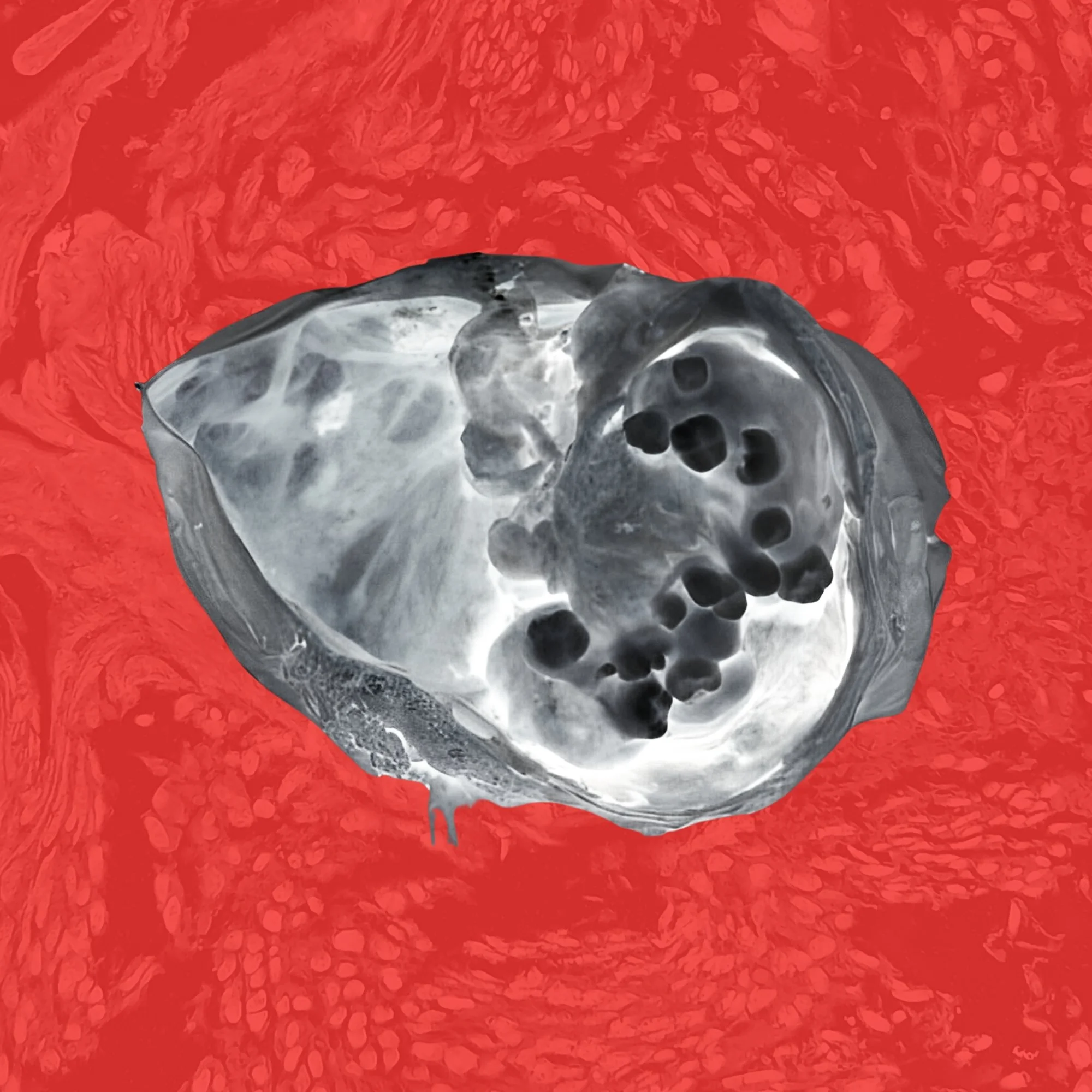
The HR representative at my workplace doesn’t want to have this conversation. He’s visibly sweating and his hands are shaking. He repeats affirmations that everyone has an abscess, but “you take too long to undress yours” is the point he finally reaches. Yesterday, he tells me, I was in the private quarters undressing my abscess for 22 minutes. The average shed time is 7 minutes and 46 seconds. My time in the private quarters averages at 14 minutes and 32 seconds. He emphasizes that they do not want me to feel shame, they just want to make sure I’m using my time wisely.
My abscess is tingling and itching and gnawing as HR speaks. Baggy shirts I wear to hide his girth never do the trick and today is no exception. I try to shed the dressings before work, but he is never ready when I need him to be ready, and when I touch him, he hisses and stabs me in the gut.
Other people with whom I’ve talked about my abscess have similar stories to me, but not enough to dispel my self-perception of being an outcast, a monster.
My abscess is begging me to clean him, but the HR manager seems to either not notice or not care. I consider undressing it in front of him, really showing him what it's like. Finally dismissed, I trip from walking so quickly to the restroom. I slide him out from my belly and I peel the layers tenderly. Sometimes I speak to my abscess, I coo at him, in hopes he will love me.
My abscess is shaped like a cone, positioned three inches above my stomach. He hiccups a brackish fluid as I tend to his needs, coating my arms in his droppings. He smells like rotten fruit. When the shedding is complete, he recedes back into my navel and my body feels clean again and I fall into relief, disgusting relief.
A girl who sits near me, Caroline, confides in me one day about how “her brother” has similar issues as me. She tells me about a man who sells a painkiller called Lurch. Her stern warnings of the potential for addiction and overdose do nothing for me, it will be worth it if my pain can finally be numbed. “Perfect for people with abscess issues,” she says. I don’t ask her how she knows I have abscess problems because I don’t need to, I’m the laughingstock of the office.
She refers me to a drab, overlit bookstore full of empty shelves. Behind the counter is a man with a thick mustache and muscles that could kill me with zero effort. I trust him immediately. He hands over the bag and says he’ll let me walk away with it for free if he can touch my cock. I agree to his terms. He takes a firm grip, winks, and smells his hand when he’s done. Satisfaction and disgust coexist on his face. He teaches me how to crush up the drug, and lets me snort one on the house. “It will take about an hour to take effect,” he says.
My abscess is beginning to crawl. With an apologetic face, the bookseller politely tells me I can’t use his restroom. A local coffee shop is next door and I buy a latte for a stranger to get the key to the bathroom stall. The lurch kicks in as soon as I sit down on the toilet, the agony has been eviscerated. Multiple people are knocking on the door with open palms. “We have abscesses too!” they yell, but my bliss drowns out my concern for them. His fluid is suddenly soda as far as I’m concerned. Free of pain, I shed the rest of my abscess and leave the shedded skin littered across the floor. Walking out covered in my filth is no longer humiliating, it’s empowering. The shocked stares I receive from the cafe’s inhabitants are badges I wear with honor. I feel like God.
I snort the Lurch each morning, and my abscess barely surfaces. When he needs to shed, it remains a messy process, but one that comes without suffering. For the first time in my life, I am in a constant state of relief and warmth. Great numbers at work. The fear has gone away, the self-hatred has vanished. Upper-hands reaching out to congratulate me on my productivity and shake my hand.
A routine is set up: every Wednesday, I go to the bookseller, he touches my cock, he gives me Lurch. Today, the bookseller is not answering his phone. I am down to two doses. I call, I text, I beg him to forgive me if I’m being a bother.
When I’m down my last pill, I hobble to his store, knocking on the door with a clenched fist, ready to plead and look pitiful. A boy in white pants and a pink polo welcomes me with suspicious eyes, introducing himself as Cory. He is skinny like meth and his eyes are practically falling out of their sockets. He could be anywhere from 13 to 35 years old and he is looking at me with a message in mind. In a voice fit for radio, he asks me if I’m looking for Roger. “He did me favors,” I tell him.
Cory shakes his head. He tells me Roger has died, his addiction got the better of him. “People like you enabled him,” he tells me. It is his opinion that I have blood on my hands.
He’s kind enough to hear my story, and when I finish, his anger turns to sympathy. He offers to help get me clean. When I try to explain the severity of my abscess, he pulls up his shirt, revealing an off-white abscess, dry, locked in a floral position. He brags that he feels no pain and encourages me to touch it, laughing off my notion that it may be infected.
“I’m part of a spiritual center, entirely non-denominational,” he tells me. “We keep people safe from drugs, we help reunite them with the inner being they have ignored for so long. We will be holding a vigil in our chapel for Roger this evening, and you’re more than welcome to attend.”
I decline his offer, but as I snort my last dose of Lurch in the parking lot of my office the next day, I take his words to heart until the drug hits and tosses me back onto my cloud. I’ve been meaning to ask Caroline about a backup supplier she may know of, just to be safe, but she hasn’t been at work. Her phone is off. My boss tells me she hasn’t called or shown up for work in six days and seems surprised when I say I didn’t notice. “We have reason to believe she’s still alive, and that’s what matters,” is all he says when I beg him to elaborate. He repeats the phrase like a mantra no matter how I phrase the questions.
Before bed, I look into the mirror and tell myself that I can live my life again without Lurch, and it feels true. The next morning, I’m slapped awake by my abscess wriggling and kicking my gut. He shrieks to be undressed. He’s just as panicked as I am. He’s thickening quicker than I can peel. My entire lower body becomes soaked before I can get a handle of him. When the ordeal settles, my carpet is littered with a pile of bubbling sewage and my abscess is humping the air. I know I will grow stronger if I survive this, if I let the pain overcome me until I adapt to it, but the “if” is far too broad for comfort. All of the shame that was so thoroughly suppressed comes back with a vengeance.
My desperation reaches the point where I travel to skid row, limping and gasping the entire way. Even if they don’t have Lurch, they probably will have heroin, and heroin will work well enough for my current needs. The pain needs to stop, I don’t care how I get there.
My abscess is leaking to the point where it’s visibly doused my shirt and pants in one ever-growing stain, showering itself onto the ground beneath me, but I am in far too much agony to care about what this does for my appearance.
Skid row has been relegated to the beach in recent years, its shores abandoned due to the takeover of the local cartel. Waves scream as they crest the shore, beckoning me to walk towards the silhouettes, their heads all pointed down at their feet. Scattered bonfires on the shore are the only available light source. Broken glass in the sand sparkles in response to the full moon, and I see two men with sallow bare feet leaving trails of oil-colored blood in their wake. Dealers sit in the lifeguard stands, each with an armed guard at the ladder who takes the customer’s money, at which point the dealer will throw the drugs down from his perch.
I am welcomed with open arms by people who seem to know what I’m experiencing. Inhabitants of the row pass me by with a friendly nod, as if they’ve seen wounds like mine a thousand times before, a strangely comforting feeling. My abscess refuses to stop growing, his weight concusses me into a lurking hunch, a feral beast. I move, smell, and look like decay. He is taunting me and telling me that this won’t ever end. My organs are in the process of reorientation. Staying afloat is a big ask. Occasionally, I stop and sit. When I sit, I peel, if only to pretend progress is an option. The lining of my throat is dangling from my lips, wounded from my persistent dry heaves.
My ears ring, the drums thundering towards a blowout, but I can hear passing whispers of love and encouragement from every soul I pass. Their sentiments sound like the language of ghosts.
At the foot of a lifeguard tower, I sit on my hands and knees, yelling out the only word I can get out, which is “please.” Feet gather in circles around me and the ringing drowning out my ears doesn’t quite dim all the what the fuck’s.
I’m handed a bag of something gray. “Good luck,” the voice atop the tower tells me. I pour a dash onto my finger but I’m huffing with such a lack of control that it flings the drug into the sand. My second attempt is a success. There’s a strange taste in my nasal cavity oddly reminiscent of a public restroom, but that doesn’t matter, I’m cured. All I can hear is the ocean. It’s as if everybody else has gone away. Fighting my abscess can come at a later time. He can grow and writhe and dance in the cool open air for now, perhaps if I let him have some time to himself he’ll be less fussy when I try to put him away. For now, I stare at the ocean, smiling at the waves as they wash over me, allowing sleep to smother me.
* * *
I am in a rundown church, the kind you’d expect to house a stereotypical Vegas wedding. My vision flickers. People in tan robes are meditating around me, and when they come out, they approach me slowly and bow.
“I thought we might meet again,” says the boy from Roger’s store. With a crimson robe in place of an ill-fitting tank top and lime green short shorts, his opaque whispers of hope take on a new form. My abscess remains ever corpulent, but it's sitting still, leaning sideways, fast asleep.
“We found you passed out on the beach. You barely had a pulse, you were impossible to awake. Your abscess was starting to rupture your internal organs. We carried you here and you were stabilized by our doctor. We’re working on finding you a surgeon to take care of the rest. If you make any sudden movement, you will die. I promise I do not intend this as any threat. You have one foot in the grave.”
I’m dizzy and nauseous, and I ask if I can vomit. The boy nods, of course. He hands me a bucket lined with cloth and bits of ruptured, pink shavings spill out of my mouth.
“I told you we could heal you,” he says, stroking my hair. “We’re going to make you okay.” I ask what the catch is. “The catch is, you have to live a clean life. You can’t go back to drugs, you can’t go back to skid row. Other than that, there are no strings attached here. We have an oath. We’ll have you in an operation room by five a.m. at the latest. We’ll put you back to rest until then.”
A tube emitting green fog is put into my mouth and I drift into the operating room. The ceiling is the same as the room I was in before, and I can’t look around to see any other potential differences, but there’s a shifting of energies; from an open space to something more claustrophobic and private.
A doctor cranks a gear and my head rises to see my towering abscess, a smattering of car accident brains. A painting of a bald man with a cicada tattooed on his forehead, his hand raised in a gesture of peace, stares at me.
“We need you to watch this. We’ll keep you numb, but we need you to understand what Lurch has done to your body.”
There are five surgeons in total. Somehow, they’re able to see through their masks. A series of syringes are inserted into the abscess, draining the fat through thick tubes which lead back to a large cylindrical object bound with blue and red wires. The surgeons use these large scissors to cut apart the cocoon of hardened boils. Some of the syringes, I’m told, are lubricating my abscess. “Otherwise, we’d have to use a chainsaw,” they tell me, zero humor in their voice.
In spite of their promises, I feel as though my entire body is engulfed in flame. I beg for them to stop, to give me some sort of pill. They remind me that they don’t use drugs here. “There should no longer be pain” they say. “Perhaps it’s all in your head.”
The room takes a dizzy shape and, in its current state with the incisions, my abscess is a gaping mouth, howling into the void. The slicing and the peeling becomes a burst of bodily catharsis. My abscess is systematically weakened into a hollow nub. The surgeons pause, change into new uniforms, and wield saws and butcher knives. They stab needles into the veins of my feet and roll my bed through a hallway. I pass a green window into a large room where I see an assembly line of abscesses and men in lab coats and face shields draining them into tubes.
“This is the part we need to put you to sleep for,” Cory tells me.
* * *
I wake up with my navel and stomach sewn together, forming an asshole shape where my abscess once lived. My legs and feet seem smaller than they once were. I’m kept in this empty room for two days. My saviors have left and my first human contact in days is with authorities who come in with guns drawn. They’re trying to stop a trafficking operation, they say. I’m questioned as a suspect, but not for long.
“You made somebody very rich,” a cop says, as though this is all my fault.
I am made to take a medical assessment. The doctor looks surprised when he sees me. He touches me as though I’m a priceless porcelain doll who will shatter with any pressure. “Because you are,” he tells me when I point this out to him.
He murmurs mutterings to himself as if by habit. Other doctors come in and take pictures, notes.
Soberly, he explains I no longer possess a gut, that my stomach was heavily scarred in the operation and that I won’t be able to use the toilet without assistance any longer. A very nice social worker is going to help me find a home where I’ll live with a nurse in a cabin in the forest.
He’s not optimistic about rehab getting me back into shape. “Your body scares me,” he says.
“But my abscess is gone, right?” I ask.
“It’s gone.”
“Won’t come back?”
“There’s not much of a body for it to grow back into,” he says, and he leaves the room.
I smile, which confuses the nurse. I’ve never heard words so comforting in my life. The nurse tells me he’ll be back tomorrow for more tests. Per my request, he turns the lights off and I’m bathed in beautiful, comforting darkness. For the first time in my adult life, I feel hope.
Michael James Hoarty is writer based in Chicago. Among other publications, his work can be found in Bruiser, Expat, and A Thin Slice of Anxiety.