…And Then Everyone Clapped
by Malik Berry
The air is thick with tension as the final shot you worked so hard on is snuffed out with an abrupt smash cut to black. You breathe in. Everything is silent. What was once good theater etiquette now becomes worrying. All the scenarios your mind painted in the days leading up to this range from having a 2-in-1 to 100-in-1 chance of happening. That’s fine. You’re not the first to be nervous about your first feature being played at a film festival, and you won’t be the last. But this frame of a black screen that you edited to last six seconds feels like an eternity. You grab onto your lead actor’s hand.
Finally big, blinding white letters burst onto the screen. They read “written and directed by.” Just beneath it is your name. You breathe out. You have prostrated yourself in front of a dark room of strangers for 98 minutes. You ask yourself if that’s too long, if you’ll need to make some cuts in the future. You wonder if the color grading was off, or it was just the projector, or if anything was wrong with it at all. Dozens of other insecurities latch onto you like leeches, thirsty for the pride in having taken your dream this far. They’re sucking you dry at this very moment, and your head starts to swim. You close your eyes and squeeze your lead actor’s hand, hoping it’ll keep you from fainting.
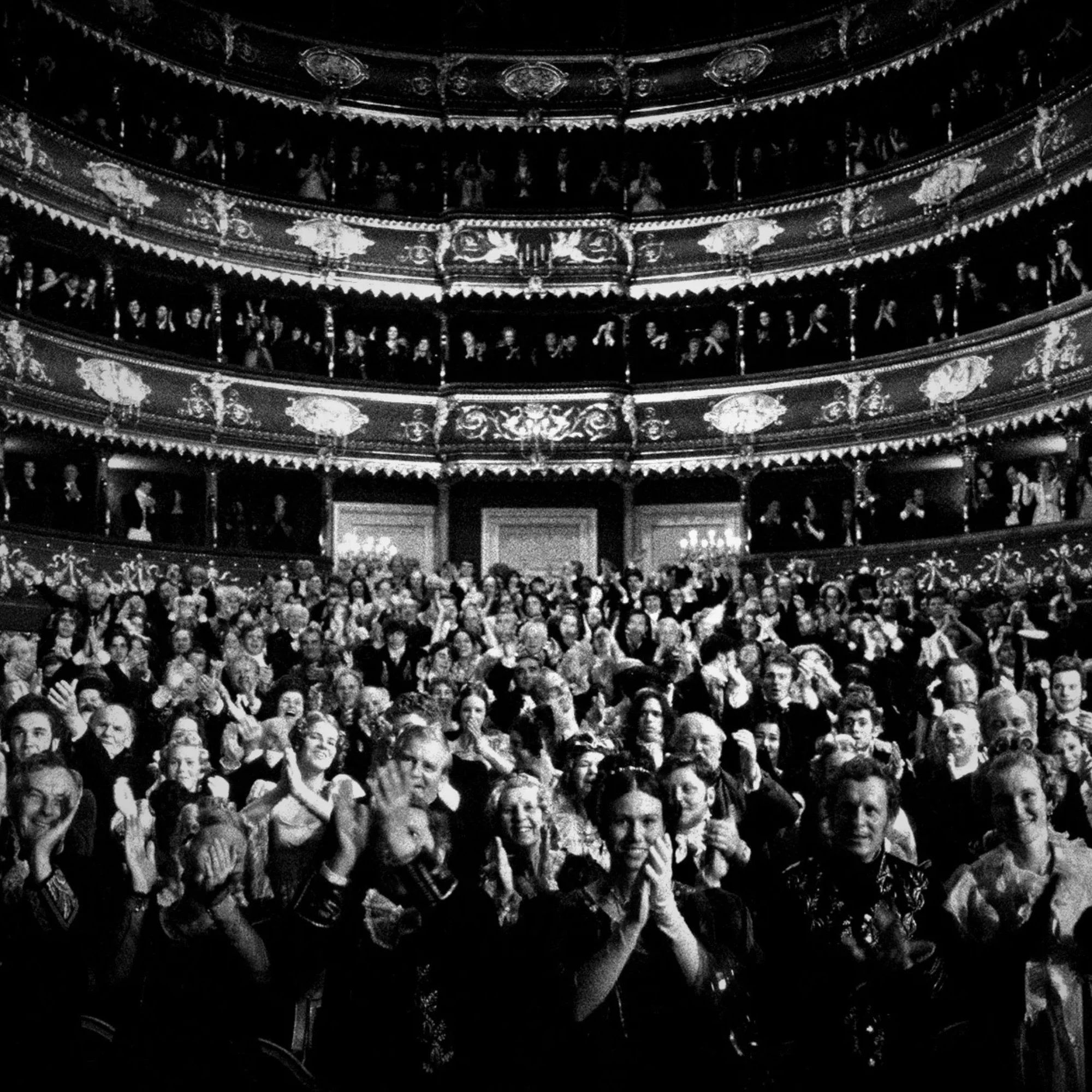
Then someone in the audience claps. And another. A handful more. Soon the whole theater, loaded to capacity with 212 critics, industry professionals, and fellow dreamers explodes into applause. The grip on your actor loosens, and your eyes open. This is no dream anymore. Your first production is receiving praise. It’s not the polite clapping out of being presented at a festival either. The lights start to rise and as you look around, people begin to do the same as they clap. Others follow suit until the whole auditorium is on their feet, their rapturous approval turning into a standing ovation. And you couldn’t be more relieved. You couldn’t be happier.
Looking to your left, your lead actor is beaming. Even more as his name appears on-screen and the clapping is joined by cheers and even louder applause. As your eyes well up in joy, he starts to look dazzling, as if seeing through a lens smeared with Vaseline. To your right, your executive producer, and professor at the film class you graduated from. She saw a seed that needed to bloom, and provided the nourishment to your project that led to this growth, and promised to be there for the whole garden to appear. That’s how you put it in the pre-screening interview at least. The writer in you couldn’t resist a good metaphor.
In plain words, she’s happy for you. As happy as you are, wrapping her arms around you into a tight hug before loosening again to join in the applause as the credits roll. And soon, you’re joining in. It may seem corny to applaud yourself, but something has taken hold of you. Euphoria, disbelief, gratefulness. It’s hard to define in a single word, but you clap anyway. So does your lead actor, the rest of the cast down the line to your left, and now everyone is applauding. It persists as the credits go on, all the names of crewmates you recall appear. You make a mental note to send individual emails to them all. It passes crew and goes into thank yous, all of which include family members, friends, mentors, and the neighborhood in which you filmed. It goes all the way to the “All Rights Reserved” copyright message. And then it ends.
And everyone is still clapping. You are still clapping. You look around befuddled, finding those in your row are also still putting their hands together, expressions starting to sour. As your palms turn red and the bottom of your phalanges get sore, you find it’s starting to get a bit excessive.
You’ve always read the headlines and watched the media scrum about standing ovations at Cannes, Venice, Sundance, or Tribeca. They’re a formality in the film festival culture, often a good sign of a film getting distribution. They’re also a staple of curiosity. You go over the numbers in your head. The average run for applause after a film ranges across every festival. At the Cannes Film Festival, it’s around 4 minutes. The longest standing ovation at Cannes was for Pan’s Labyrinth, which lasted 22 minutes. Behind that is Fahrenheit 9/11, lasting 20 minutes. At the 2023 Venice Film Festival, the first English-language feature by Spaniard director Pedro Almodovar, The Room Next Door had everyone on their feet for 18 minutes, a monumental effort for a festival whose average ovation tends to last a strong six minutes.
This festival isn’t Cannes or Venice. It’s hardly Sundance or Tribeca. It’s not even the Chicago Underground or Slamdance for all the small movies. Sure, it’s Los Angeles, but the only famous people to be seen here are indie distributors and the odd up-and-coming actors, of which you’ve only seen at least ten. Looking around, you can’t find where they sat, but you notice something you haven’t seen since you started doing math to yourself.
Everyone is still locked in place, applauding long after the projector shut off. They’re dripping with sweat now, refusing to or unable to loosen their collars or open their jackets. You try to do so yourself as the back of your neck starts to get moist, but you can’t pull your hands away from colliding with each other. It becomes more painful as you continue clapping. You look down and find blisters forming. You wonder just how long you were clapping. Time tends to feel longer when you’re nervous. That 98-minute movie felt like two hours. And this standing ovation has lasted for the entire credits. In editing, you clocked them in at four minutes. That feels like forever ago.
You turn to your lead actor.
“Feels like it’s going on forever, huh?” you ask, turning it into a little crack at the applause. He turns to you, eyes bloodshot, cheeks flush, and lips dry. You jolt but find your hands are still clapping, and so are his.
“What is going on?” he cries. “Why can’t we stop?”
Looking down at his hands, an unmistakable drip of crimson is falling into the sleeve of his rented tux. You whip your head back up from the horror to your right. Your executive producer—your professor—is looking worse for wear. In your first year of film school, you recall her boasting that she was the most agile woman in her sixties that she knew. By the time came around to fund and support your first film, she had turned 70. She was every bit as agile and energetic, as the tight hug had proven.
You start to miss it now, like that of your departed elder family.
And seeing her isn’t helping, her wrinkled hands beaded with the same dark red. Looking closer, you see a row of hard, off-white mounds jutting out of her palm as she cries in pain. Her clapping has become duller as bone knocks against bone, and the agony brings her down to her knees. You try everything to break your own applause, but it’s like tugging out of a rope binding the two together. You want to hold her, pick her up, send help, but are condemned to watch as she curls up.
Looking around frantically, everyone is either buckled over like your professor, dripping blood from between their hands onto the ground or seats beneath them, dotting the dark blue carpeted floor or blending with the burgundy upholstery, or they’re still standing upright, eyes still drawn to the screen with running eyes. More startling, some are still smiling wide and bright as if staring into the gaze of a loving god.
All joy has been sucked from this moment. Your fame and success is no longer on your mind, just your escape. If such a thing is even possible. Resigning to being a ghost or anomaly at this one-theater festival cannot be a possibility. You talked all the time about the blood, sweat, and tears you want to put into your productions. This is not what you wanted to give up. No standing ovation is worth all this.
But the clapping still sounds good to you. The recognition under the circumstances has your heart feeling full. You begin to smile, and you can’t stop it. Your arms are tired, but you can’t feel them anymore. You feel your skin give way. You barely feel your knuckles burst through as you let out an impassioned “thank you.”
They like you. They really like you. Enjoy your flowers while you can.
Malik Berry is a writer and community activist from Baltimore, Maryland. Their writing includes fiction, poetry, theatre, and film criticism, and has been featured in A Coup of Owls Press, World Hunger, DON'T SUBMIT, Baffling, Across the Margin, and Meow Meow Pow Pow. When not writing, they can be found in mutual aid programs and fostering relationships with handsome video game characters.
IG: @malikb_jpg
Bsky: @malikbtxt.bsky.social